Independent software product
Radivum — Azure network architecture, grounded in evidence.
Local-first analysis for Azure networks: topology, routing, security, and reachability as a traceable architecture model. Azure credentials stay on the workstation.
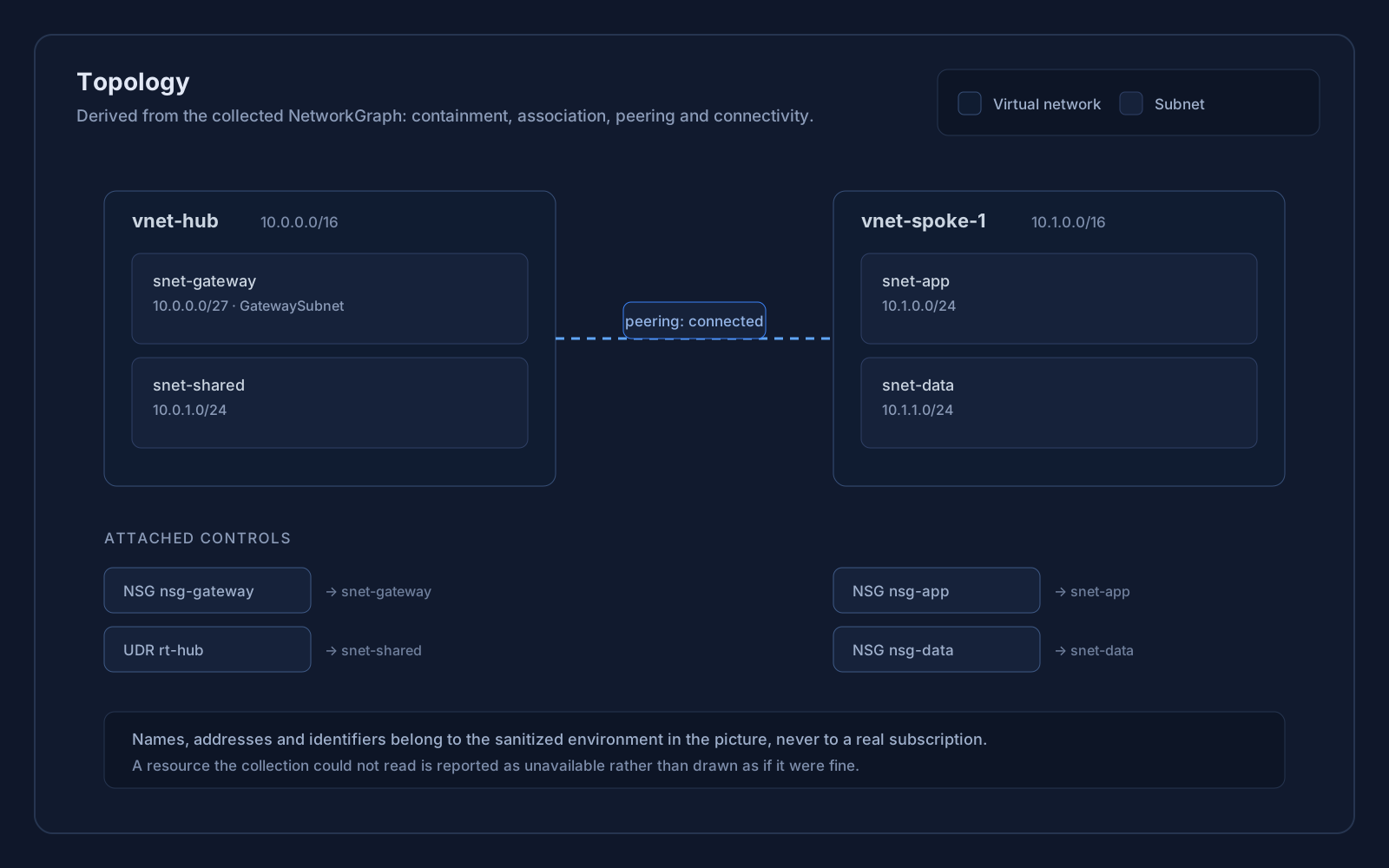
Radivum is a platform I founded and build for analyzing Azure network architectures. Instead of a resource list, it shows the architecture: virtual networks, subnets, peerings, NSGs, and route tables are derived from the collected configuration into one coherent model – with findings, routing and security views, a reachability matrix, and trace.
My contribution
I am responsible for Radivum from product idea to delivery: product definition and positioning, architecture and technology decisions, and implementation as lead developer – from the local collector through the analysis engines and backend to the web interface.
Architecture approach
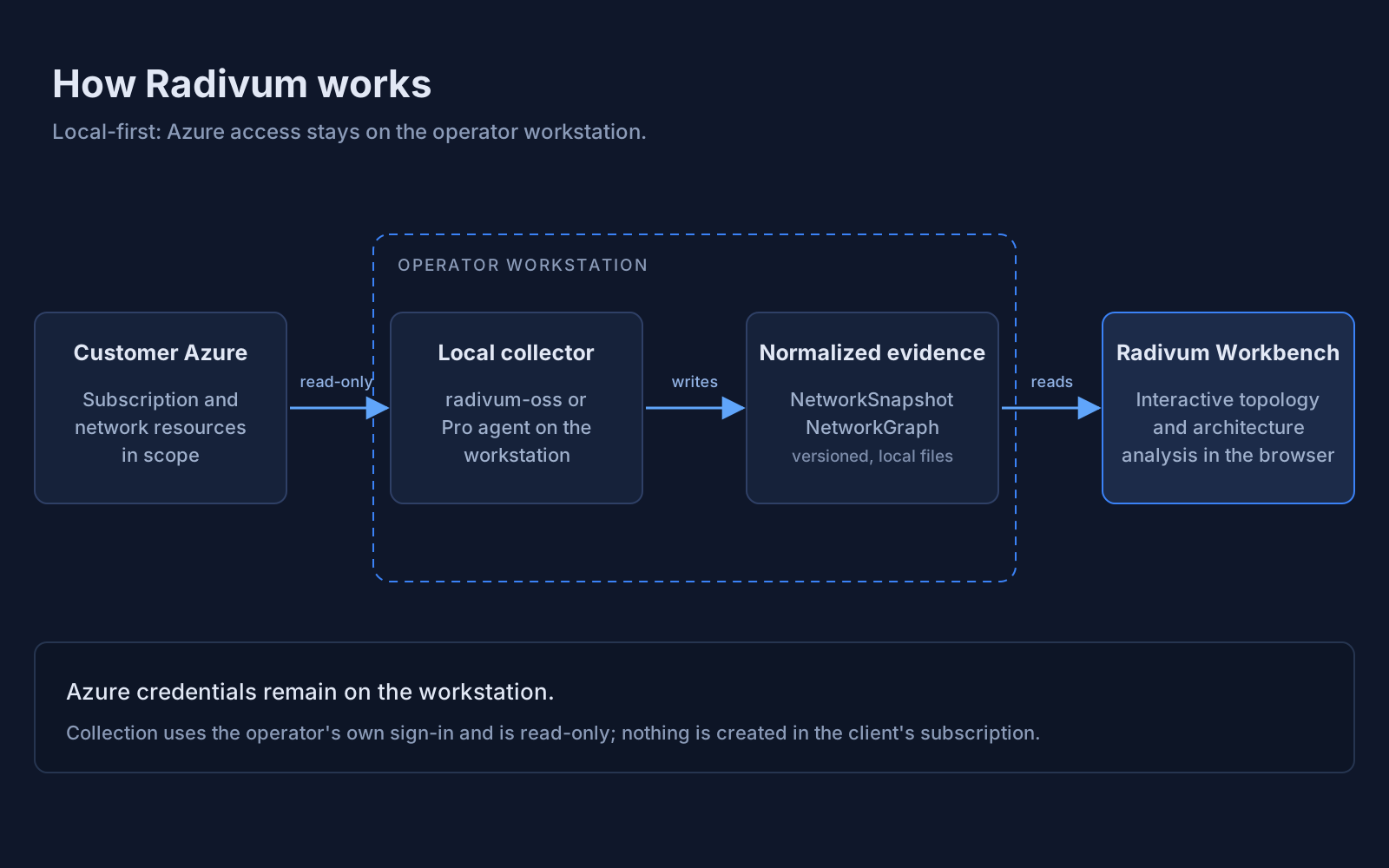
Radivum is local-first. A collector runs on the architect’s workstation, reads Azure with the operator’s own identity and strictly read-only, and writes versioned artifacts. The browser-based Workbench works on those artifacts; Azure credentials never reach the platform.
The analysis is deterministic rather than heuristic: every finding names the evidence it was derived from. When permissions are missing, Radivum reports partial coverage instead of making unsupported claims. Optionally, a Pro agent connects the workstation to a control plane over an outbound-only connection – with no inbound ports and no Azure credentials in the cloud.
Open source and Pro
The core – local collection, normalized graph, analysis workflow, and demo environment – is available as open source. The Pro edition adds connected agent collection, deeper deterministic analysis, and consultant-oriented workflows.
Radivum complements Azure’s own tools rather than replacing them: it does not run live tests, but shows from configuration where a closer look is worthwhile.
Product views
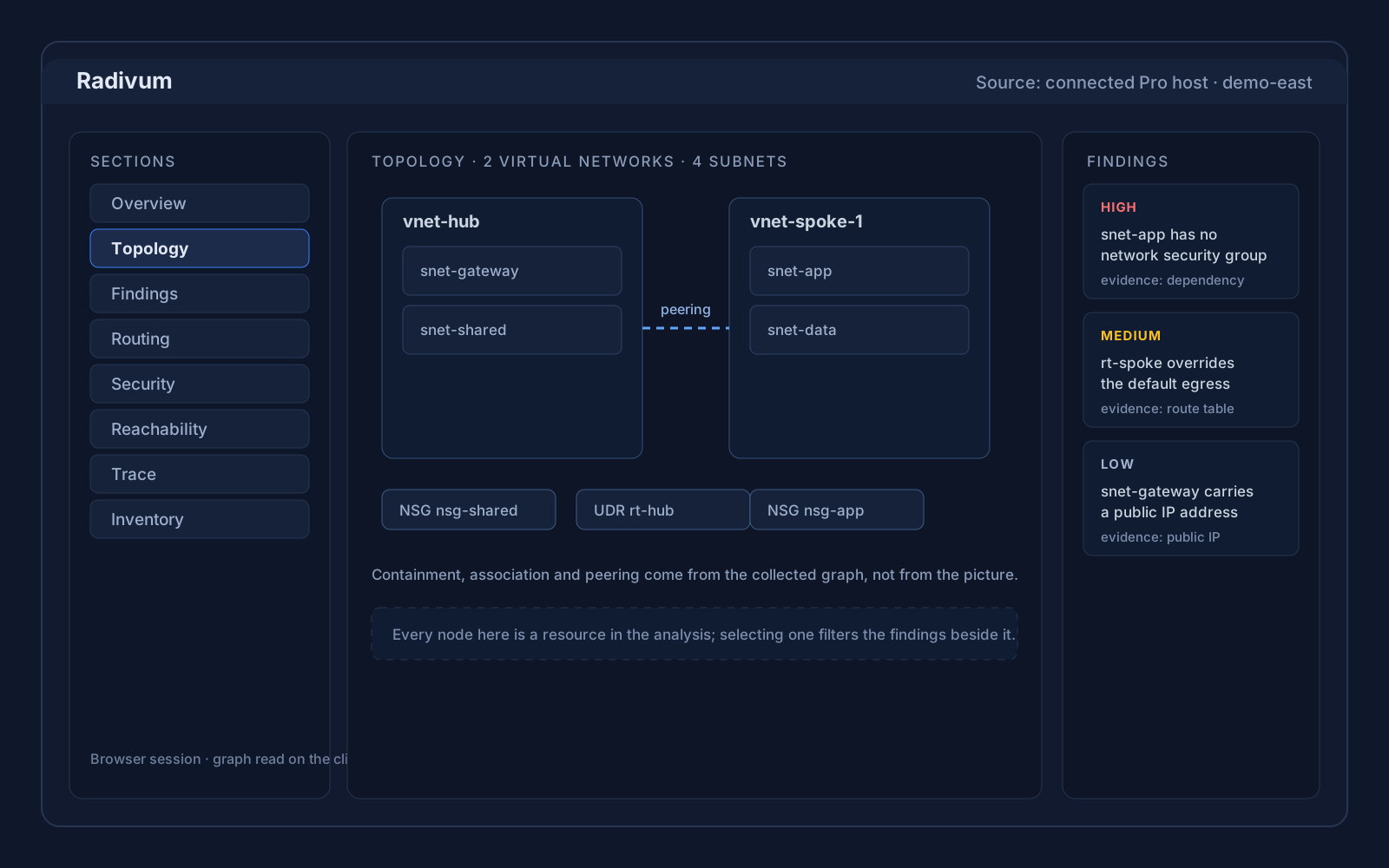
Architecture focus
- Local-first – Azure credentials never leave the workstation
- Read-only collection using the operator's own identity
- Versioned contracts for evidence and topology (NetworkSnapshot, NetworkGraph)
- Deterministic analysis with a traceable derivation
- Findings, routing, security, reachability, and trace
- Interactive topology in the browser with SVG and draw.io export
- Optional connected mode over an outbound-only connection
- Clear separation of the open-source core and the Pro edition